
Why Quartz Aggregate Systems Stand Apart
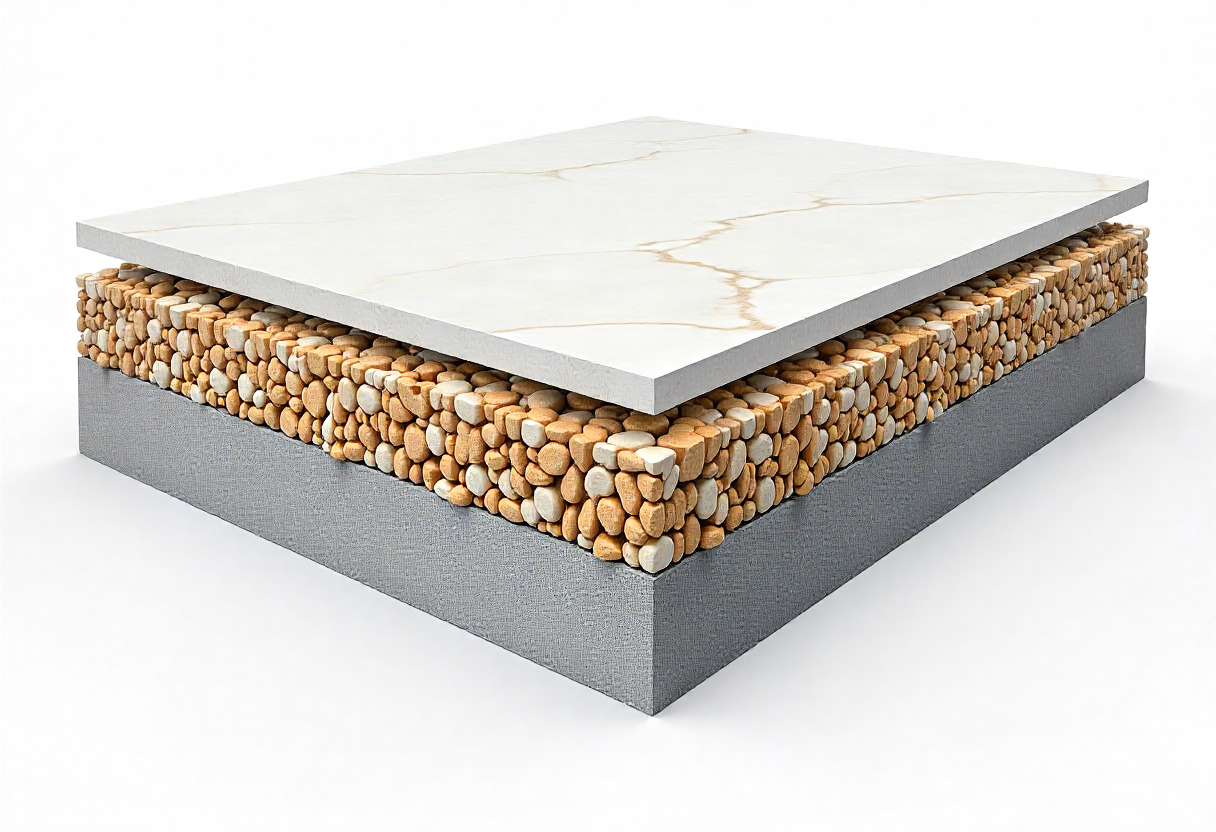
When Frank, a facility manager at one of Ipswich’s manufacturing plants near Swanbank, called us last winter, his concrete floor had seen better days. Years of forklift traffic, chemical spills, and the constant beating from heavy machinery had left the surface cracked, stained, and honestly, dangerous for his team. He needed something that could handle the daily punishment without breaking down every few months. That’s when he discovered quartz epoxy flooring in Ipswich — and it changed everything for his operation.
We’re Crystal Epoxy Flooring, and we’ve been installing heavy-duty flooring systems across Ipswich and South East Queensland for years now. What makes quartz aggregate systems special isn’t just the toughness — though they rate a 7 on the Mohs hardness scale, which is about as hard as flooring gets. It’s the way the system works together. When you broadcast colored quartz aggregates into high-build epoxy, you’re creating a floor that can laugh off impacts that would crack standard concrete, resist chemicals that would eat through regular coatings, and provide slip resistance even when wet.

Heavy-Duty Performance That Actually Delivers
Quartz epoxy flooring Application-Specific Performance
Manufacturing & Heavy Industry:
Quartz epoxy flooring withstands heavy machinery, impact, heat, and chemicals—ideal for Ipswich factories and production floors.
Commercial Kitchens & Food Service:
Food-safe, non-slip, and resistant to grease, water, and cleaning chemicals, ensuring hygiene and compliance with health standards.
Automotive Workshops:
Protects against oils, fuels, and solvents while providing impact resistance and a professional finish for service bays.
Healthcare & Laboratories:
Seamless, chemical-resistant, and sterile-friendly surfaces that endure frequent cleaning without deterioration.
Professional Installation Process
Thorough Surface Preparation: Uses shot blasting, diamond grinding, or etching to ensure strong mechanical bonding and moisture testing for long-lasting adhesion in Queensland’s humid climate.
Primer Systems for Adhesion: Custom primer selection based on floor condition and substrate type to prevent delamination and ensure reliable bonding.
Base Coat & Quartz Broadcasting: Precisely timed aggregate application for maximum adhesion, traction, and durability, tailored to performance needs.
Strict Quality Control: Continuous monitoring of adhesion, aggregate distribution, curing conditions, and environmental factors for consistent results.
Topcoat Sealing & Protection: Final sealing enhances chemical resistance, UV stability, and slip resistance while completing the floor’s protective and aesthetic finish.


Understanding Quartz Aggregate Systems
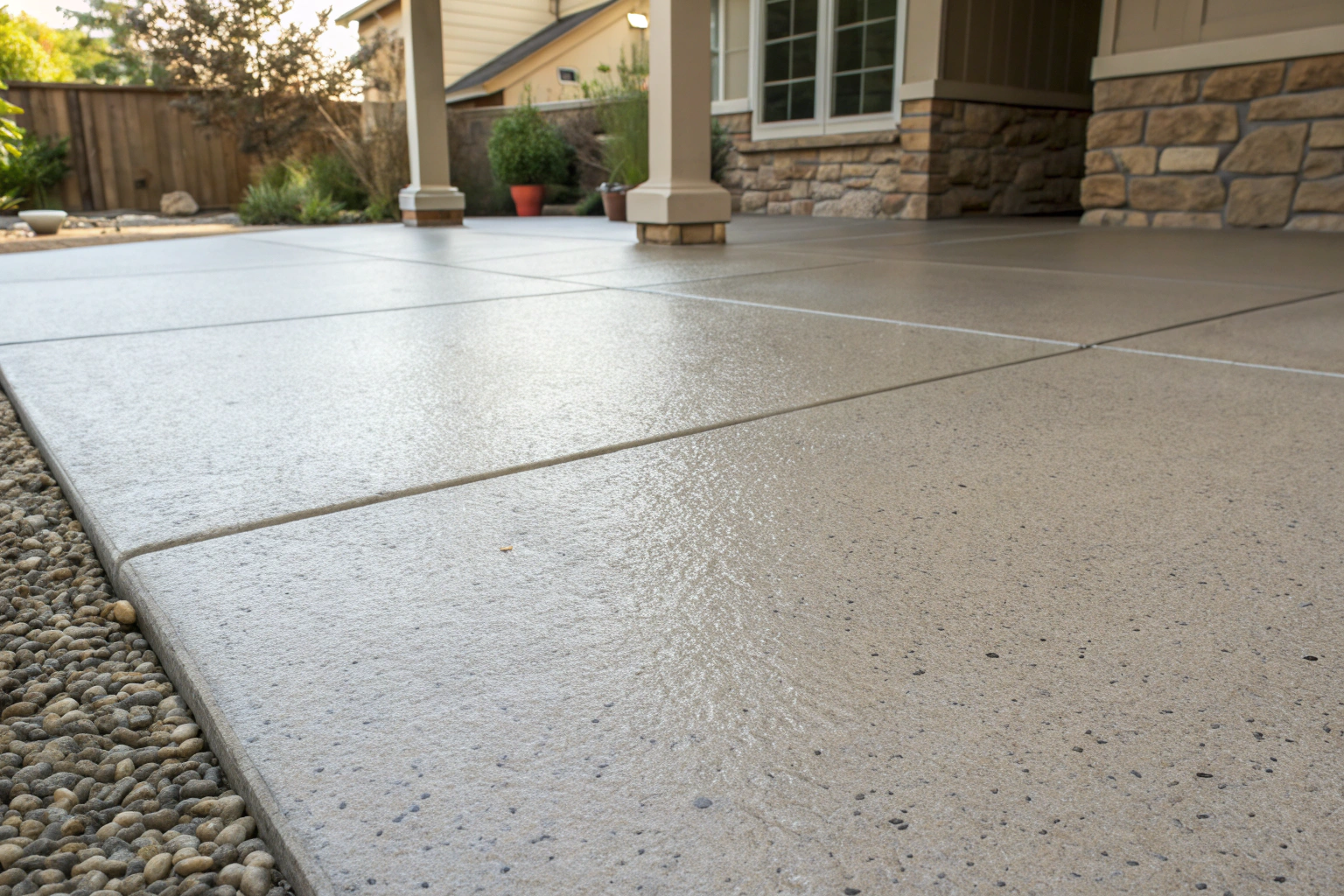
Enhanced Performance: Quartz epoxy flooring combines the strength of quartz with the bonding power of epoxy, offering superior durability compared to standard epoxy.
Custom Aggregate Selection: Different quartz sizes serve different needs — fine for easy cleaning, medium for comfort and durability, and coarse for maximum slip resistance.
Broadcast Options: Choose from light scatter for subtle texture, full broadcast for heavy-duty use, or multi-layer systems for extreme environments like hangars or manufacturing floors.
Tailored Solutions: Custom blends are available for anti-static, conductive, or color-specific needs — ideal for facilities like clean rooms, warehouses, and industrial spaces in Ipswich.
Slip Resistance and Safety Performance
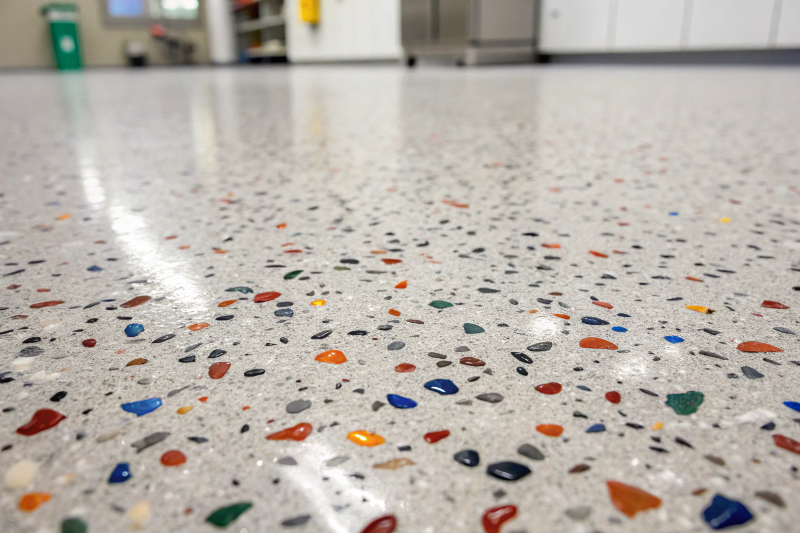
Compliance with Australian Standards: Quartz epoxy floors meet AS 4586 slip ratings (R10–R13), ensuring safety in workplaces like kitchens or food facilities, with R11+ recommended for wet areas.
Reliable Traction: These floors maintain strong grip in both wet and dry conditions, making them ideal for facilities like car washes and laundries.
Improved Workplace Safety: The visible textured surface boosts worker confidence and reduces slip-related incidents across Ipswich commercial environments.
Why Choose Crystal Epoxy Flooring for Your Ipswich Project
Getting Started with Your Quartz Epoxy Flooring Project
We work with your production schedule, not against it. Many Ipswich facilities can’t shut down completely for floor installation. We phase the work to keep critical areas operational. We schedule around maintenance windows. We coordinate with other trades working in your facility. The goal is completing your floor project with minimum impact on your business operations.
Ready to stop dealing with failing floors and get a quartz epoxy flooring system in Ipswich that actually handles your operational demands? Contact Crystal Epoxy Flooring for a free site assessment. We’ll evaluate your facility, discuss your specific requirements, and recommend the system that delivers the performance and durability your Ipswich operation needs.
Contact us today:
📞 Call for 24/7 Aviation Emergency Response
✉️ Email for detailed quotes and technical specifications
📍 Serving Greater Ipswich and Southeast Queensland’s aviation corridor
Don’t let deteriorating concrete compromise your facility’s safety and compliance.
FAQs About Quartz Epoxy Flooring in Ipswich
Should you clear coat an epoxy floor?
Yes, you should absolutely clear coat your epoxy floor — it’s not optional if you want the system to last. The topcoat seals everything together, protects the quartz aggregates from wearing loose, and gives you that final layer of chemical resistance. Here in Ipswich, where humidity and industrial chemicals are part of daily operations, skipping the topcoat means your floor won’t hold up to Queensland’s conditions. We’ve seen DIY jobs without proper topcoating fail within months because the aggregate starts coming loose and the base coat breaks down.
What is the downside of epoxy flooring on concrete?
The biggest downside is the upfront cost — quartz epoxy flooring in Ipswich isn’t cheap compared to leaving bare concrete or slapping on basic paint. Installation requires shutting down your space for several days while we prep, apply, and cure the system properly. If your concrete has serious moisture issues — which happens a lot in Ipswich’s humid climate — we need to address that first or the epoxy won’t bond, adding time and expense. And once it’s down, you can’t just change your mind next week — removing epoxy is a major undertaking.
How long does epoxy waterproofing last?
A properly installed quartz epoxy system in Ipswich should provide waterproofing for 15-20 years in typical commercial applications. Queensland’s wet seasons and humidity are tough on any coating, but epoxy creates a seamless, non-porous barrier that water can’t penetrate. The waterproofing only fails if the coating itself breaks down from chemical exposure, UV damage, or physical damage to the surface. We’ve got installations around Ipswich that still shed water perfectly after a decade of use.
How long to wait to clear coat an epoxy floor?
You typically wait 12-24 hours after broadcasting the quartz aggregates before applying the topcoat, though Queensland’s humidity affects this timing. The base coat needs to cure enough to handle foot traffic for topcoat application, but not so long that adhesion between layers suffers. In Ipswich’s summer heat and humidity, we’re often on the shorter end of that window — waiting too long in humid conditions can create surface contamination that prevents proper bonding. Temperature and humidity monitoring during installation determines the exact timing for your specific project.
How long do I have to wait to walk on an epoxy floor?
You can typically walk on the floor after 24-48 hours, but wheeled traffic and heavy loads need to wait 5-7 days for full cure. Queensland’s humidity slows curing compared to drier climates, so Ipswich installations often need the full timeframe before returning to normal operations. Light foot traffic for inspections can happen sooner, but we don’t want your team doing full work activities until the system reaches sufficient strength. For facilities that can’t shut down that long, we phase the installation to keep critical areas operational while other sections cure.
What is the weakness of epoxy?
UV exposure is epoxy’s biggest weakness — direct sunlight causes standard epoxy to yellow and chalk over time, though this matters more for outdoor applications than enclosed Ipswich warehouses. Epoxy can also be brittle compared to polyurethane systems, meaning sharp impacts can chip the surface even though it handles compression loads extremely well. Some aggressive solvents and acids can attack epoxy if left sitting on the surface for extended periods rather than being cleaned up promptly. That’s why we use aliphatic polyurethane topcoats and proper system design — we’re engineering around epoxy’s weaknesses to create floors that perform reliably in real-world Ipswich industrial conditions.
