
Why Ipswich Office Buildings Are Switching to Epoxy Systems
The shift happening across Ipswich’s commercial office sector isn’t accidental. Property managers are calculating the numbers and realising traditional flooring just doesn’t add up anymore.
Take the accounting firm on East Street—they were replacing carpet tiles every three years in their high-traffic areas. The disruption alone cost them thousands in lost productivity, not to mention the actual replacement expenses. After switching to epoxy, their facilities manager told us they haven’t touched those floors in five years except for regular cleaning. The math works out to roughly 60% savings over a decade when you factor in materials, labour, and business disruption.
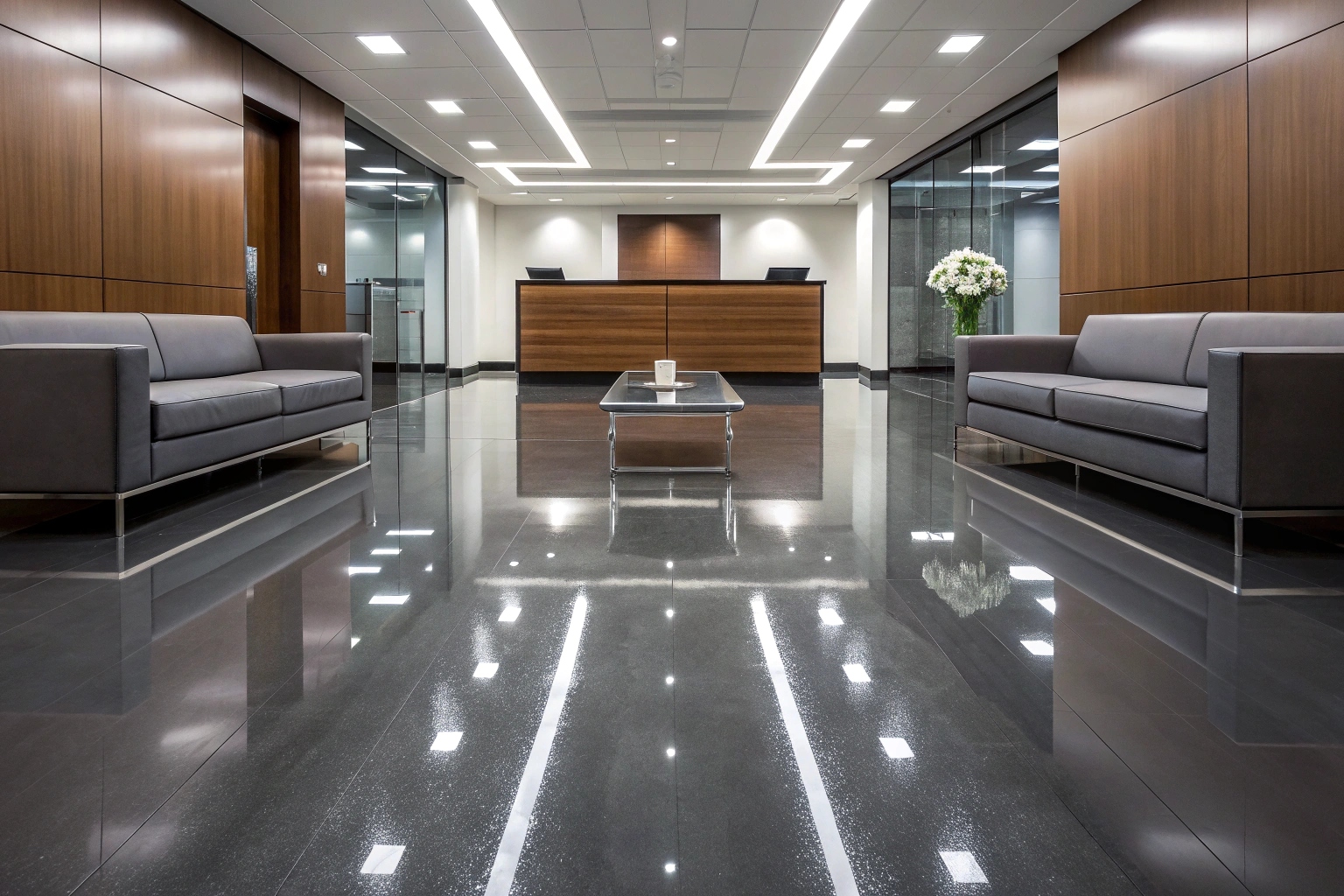
But the financial case only tells half the story. Client perception drives business decisions in professional services, and first impressions form in seconds. When potential clients step into your reception area, they’re subconsciously evaluating whether you’re the kind of organisation they want to trust with their business. A dated, patched-up floor sends one message. A flawless, reflective epoxy surface sends another entirely.
The Ipswich commercial property market has gotten competitive. Office vacancy rates fluctuate, and building owners need every advantage when attracting quality tenants. Modern businesses—especially tech companies and creative agencies relocating from Brisbane—expect contemporary finishes. They’re comparing your building against newer developments, and flooring quality factors heavily into their decision matrix.
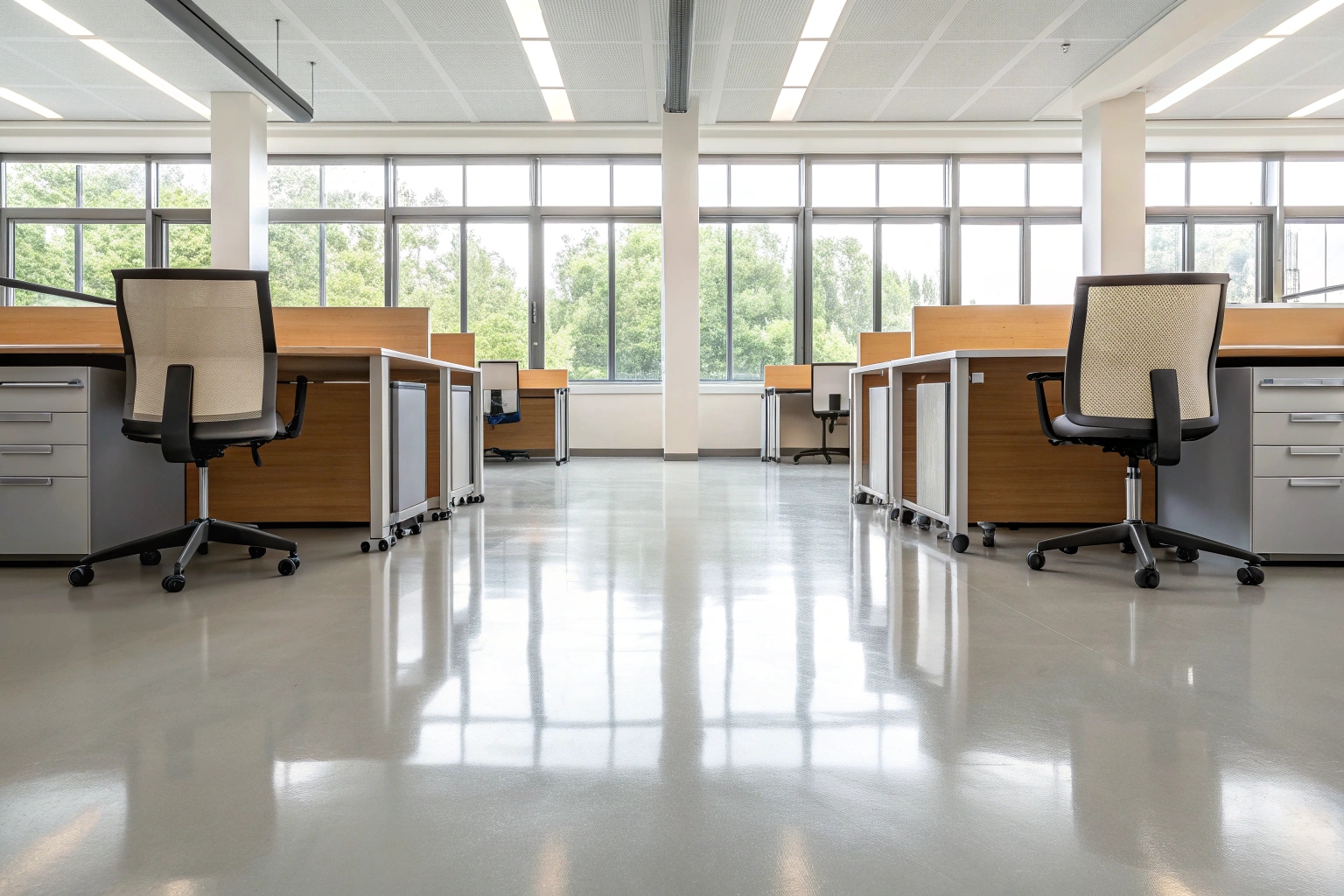
Then there’s the practical side nobody talks about until it becomes a problem. Server rooms need anti-static protection. Break rooms need surfaces that handle daily coffee spills without staining. Conference rooms need acoustics that don’t amplify every footstep during presentations. Standard flooring systems can’t deliver all that simultaneously.

Meeting the Standards Your Building Actually Needs
Building Code of Australia compliance isn’t optional, but here’s what catches people off guard—meeting the minimum code requirements doesn’t always mean you’ve met your building’s actual operational needs.
Safety and Accessibility Requirements
Disability Standards compliance gets checked during inspections, but it’s more than checking boxes. Slip resistance ratings need to work in practice, not just on paper. We’ve tested surfaces in Ipswich office buildings where the specified coating met AS 4586 standards in the lab but became dangerously slick during winter when people tracked in rain from the car park.
The solution involves selecting aggregate textures that provide grip without looking industrial or feeling rough underfoot. Nobody wants their executive suite feeling like a factory floor, but you also can’t have employees slipping near the kitchen area after someone spills water.
Fire safety codes dictate flame spread ratings and smoke development indices. In multi-story office buildings, your flooring contributes to overall fire safety strategy. Emergency egress routes sometimes require specific marking or photoluminescent properties that remain visible during power failures. These aren’t details you want to discover during a final inspection.
Indoor Air Quality Standards
The VOC conversation has gotten more serious as workplace health regulations tighten. Low-emission epoxy systems cost more upfront, but they’re non-negotiable in buildings pursuing Green Star ratings or NABERS certification. More importantly, your employees notice. Poor indoor air quality correlates directly with reduced productivity, increased sick days, and higher staff turnover.
When we installed epoxy in a relocated government office last year, they specifically required systems with zero off-gassing during occupancy. The application happened over a long weekend using fast-cure, low-odour formulations. Staff returned Monday morning to completed floors without lingering chemical smells—exactly what modern workplace health standards demand.
Installation Without Disrupting Your Business Operations
Nobody wants to hear “you’ll need to relocate for two weeks” when discussing flooring installation. Business continuity matters, especially in professional services where client accessibility can’t be interrupted.
After-Hours and Weekend Strategies
The architecture firm on Nicholas Street had a problem—they couldn’t afford downtime during business hours, but they desperately needed their worn-out flooring replaced before a major client presentation. We scheduled the work across three consecutive weekends, treating one floor at a time. Their team worked from home Mondays while surfaces fully cured, then returned to completed sections while we moved to the next level.
Fast-cure epoxy systems have changed what’s possible. Traditional installations required 72-hour cure times before foot traffic. Modern commercial-grade formulations allow light foot traffic within 24 hours and full operational loads within 48. That compression of timeline makes weekend installations actually viable rather than just theoretically possible.
Staging matters more than people realise. You can’t just start in one corner and work your way across. Proper planning identifies critical access points—emergency exits, restrooms, stairwells—and sequences application so these areas remain accessible throughout installation. We’ve done full-floor installations where employees never lost access to essential facilities.
Minimising Disruption
Odour control during application separates professional installations from amateur attempts. Even low-VOC systems produce some smell during application. Strategic use of negative air pressure, proper ventilation timing, and odour-neutralising equipment keeps fumes from migrating into occupied areas.
The real estate management company in the CBD learned this the hard way. Their previous contractor installed epoxy during business hours without proper containment. Chemical smells permeated three floors, forcing evacuation and generating tenant complaints that took months to smooth over. When they hired us for their next building, containment protocols were the first thing we discussed.
Long-Term Performance and Maintenance Reality
The conversation about epoxy shouldn’t end after installation—that’s actually when the important part begins. Understanding what keeps these surfaces performing over decades separates informed decisions from expensive mistakes.
Daily Maintenance Protocols
Your cleaning staff will either love or hate your flooring choice, and their efficiency directly impacts your operational costs. Epoxy’s sealed surface means spills sit on top rather than soaking in—coffee, soft drinks, even the occasional printer ink cartridge mishap wipes away without staining. Compare that to carpet where every spill becomes a potential permanent mark.
The law office on Brisbane Street calculated their cleaning costs dropped 40% after switching from carpet to epoxy in common areas. Their janitorial service reduced time spent on those floors by nearly half. No more vacuuming, spot treatments, or periodic deep cleaning. Just damp mopping with neutral pH cleaners and occasional buffing to maintain sheen.
But here’s what the brochures don’t mention—improper cleaning products will dull your finish faster than foot traffic. Acidic cleaners, harsh degreasers, and abrasive scrubbing pads all damage the surface layer. We provide specific product recommendations and train facility management teams on proper techniques. Sounds basic, but we’ve rescued multiple installations where well-meaning cleaning staff used the wrong chemicals for months.
Touch-Up and Renewal Programs
Even quality epoxy eventually shows wear in concentrated areas—reception desks where chairs slide, paths between cubicles and break rooms, entries where grit gets tracked in from outside. These aren’t failures, they’re normal wear patterns. The difference is epoxy can be touched up and renewed without full replacement.
Minor scratches and scuffs respond to simple buffing and recoating of affected areas. Major refurbishment involves light abrading and applying fresh topcoats—significantly less disruptive and expensive than tearing out and replacing flooring systems.
Frequently Asked Questions About Office Epoxy Applications
Commercial-grade epoxy in office environments typically performs 12-15 years before requiring significant renewal. High-traffic areas like reception or main corridors might need topcoat refreshing around year 8-10, but the base system remains intact. Lifespan depends heavily on maintenance quality and traffic volume—a quiet executive suite will outlast a busy call centre floor.
Absolutely, and we do it regularly. The key is proper staging and scheduling. Weekend or after-hours installation using low-odour, fast-cure systems allows work to proceed without forcing tenant relocation. We’ve completed multi-floor installations in fully occupied buildings where employees never missed a workday—they just avoided specific areas during designated times.
Not necessarily. We can work around fixed furniture and built-in elements. Modular furniture and personal items need temporary relocation, but proper staging means we’re only clearing and working on specific zones at a time. Most offices can shift furniture between areas rather than moving everything off-site.
Yes, when properly specified. Epoxy’s thermal properties actually complement radiant systems quite well. The installation process requires coordination with mechanical systems—we need to control slab temperature during application and curing. Your HVAC contractor and our team should discuss the timeline before work begins.
Quality commercial epoxy systems handle caster wheel loads without issue. The secret is proper thickness and correct hardness ratings. Residential-grade epoxy might show wear patterns, but commercial formulations are specifically engineered for this exact application. We’ve installed in offices with hundreds of wheeled chairs showing zero premature wear.
Ready to Transform Your Ipswich Office Space?
Professional office building epoxy applications in Ipswich require more than just applying coating to concrete. The difference between a surface that impresses clients for years and one that disappoints within months comes down to proper specification, experienced installation, and understanding how commercial buildings actually function.
We’ve worked across Ipswich’s office market long enough to know what works in CBD high-rises, what government buildings require for compliance, and what modern businesses expect when they’re evaluating office space. Whether you’re managing a heritage building conversion or a contemporary corporate headquarters, the flooring decision impacts everything from tenant satisfaction to operating costs.
Your building deserves better than generic solutions designed for warehouses or retail spaces. Office environments have specific requirements—acoustic properties that support productivity, aesthetic standards that reflect professionalism, maintenance characteristics that reduce operational costs, and durability that withstands years of daily use without showing wear.
The property managers and building owners who get this right aren’t gambling on untested systems or cutting corners with residential-grade products. They’re working with teams who understand commercial building codes, tenant expectations, and the reality of maintaining professional spaces over decades.
If you’re considering epoxy for your Ipswich office building—whether it’s a single-floor upgrade or a complete building transformation—the conversation should start with understanding your specific needs. What are your tenant requirements? What’s your maintenance budget? How can installation happen without disrupting business operations? What performance standards does your building actually need?
Let’s discuss what makes sense for your property. Contact us to arrange a site assessment and detailed proposal that addresses your building’s specific requirements and timeline.
